How Does Autonomous Sourcing Find the 'Hidden' Talent Your ATS Missed?
27 million U.S. workers are invisible to traditional ATS filters, autonomous sourcing uses semantic AI and skill clustering to surface them.
AI & Automation
9 min
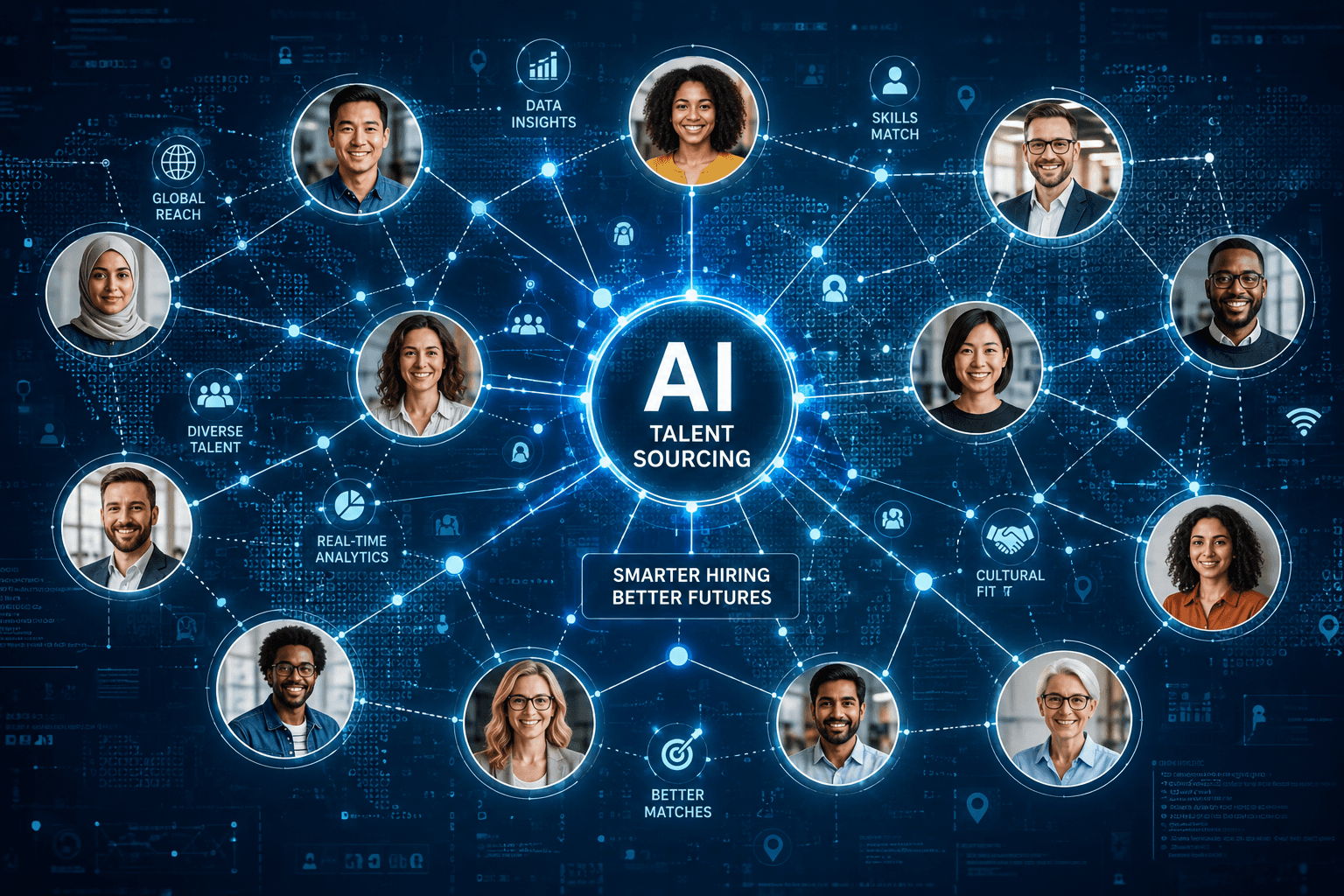
A landmark Harvard Business School and Accenture study estimated that more than 27 million workers in the United States alone are systematically screened out of jobs they’re qualified for by the very hiring tools companies rely on (Harvard Business School, 2021). That’s not a rounding error. It’s an entire economy’s worth of overlooked capability, caregivers with transferable project management skills, self-taught developers whose GitHub commits outpace their formal credentials, and military veterans whose operational expertise doesn’t translate neatly into keyword-stuffed job descriptions.
Meanwhile, 90% of companies missed their hiring goals last year, according to GoodTime’s 2026 Hiring Insights Report. Recruiters are drowning in volume and starving for quality. The talent isn’t missing, it’s hidden. And the filters designed to manage the flood are the very thing keeping the best candidates out of sight.
This article examines why traditional applicant tracking systems create blind spots, how autonomous sourcing powered by semantic AI and skill clustering rewrites the discovery equation, and what practical steps hiring teams can take to reach the 70% of the workforce that never applies.
Key Takeaways
• 27 million U.S. workers are hidden from conventional hiring pipelines by automated filters that penalise non-standard career paths (Harvard Business School & Accenture, 2021).
• 88% of employers admit their ATS screens out qualified candidates because resumes don’t perfectly match job-description keywords (Tracker, 2026).
• Semantic talent search can expand a qualified candidate pool by 3–5x compared to Boolean keyword matching (HackerEarth, 2026).
• Companies that hire from overlooked talent pools are 36% less likely to face talent and skills shortages (Harvard Business School & Accenture, 2021).
Why Do ATS Systems Create ‘Hidden’ Talent?
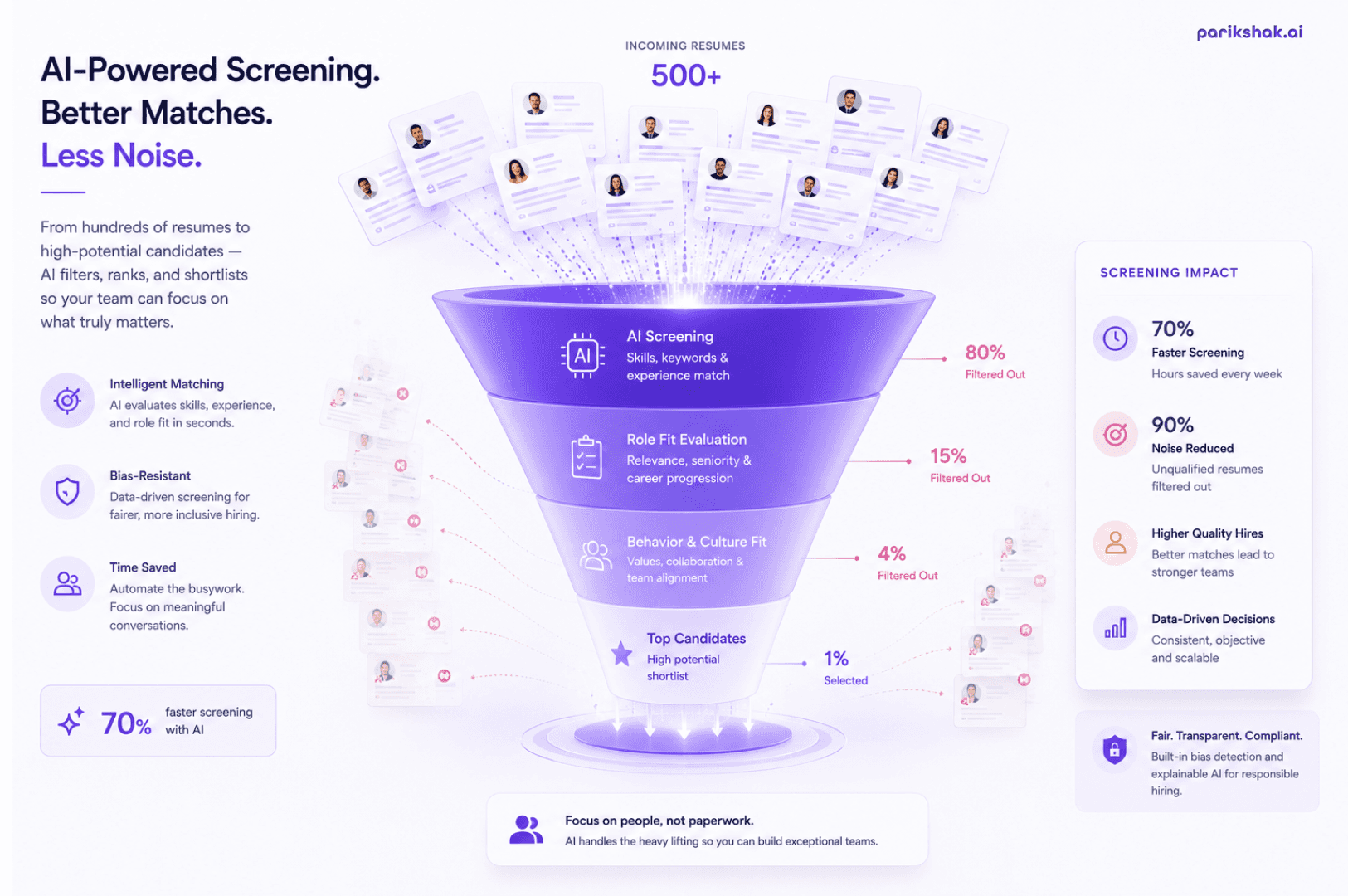
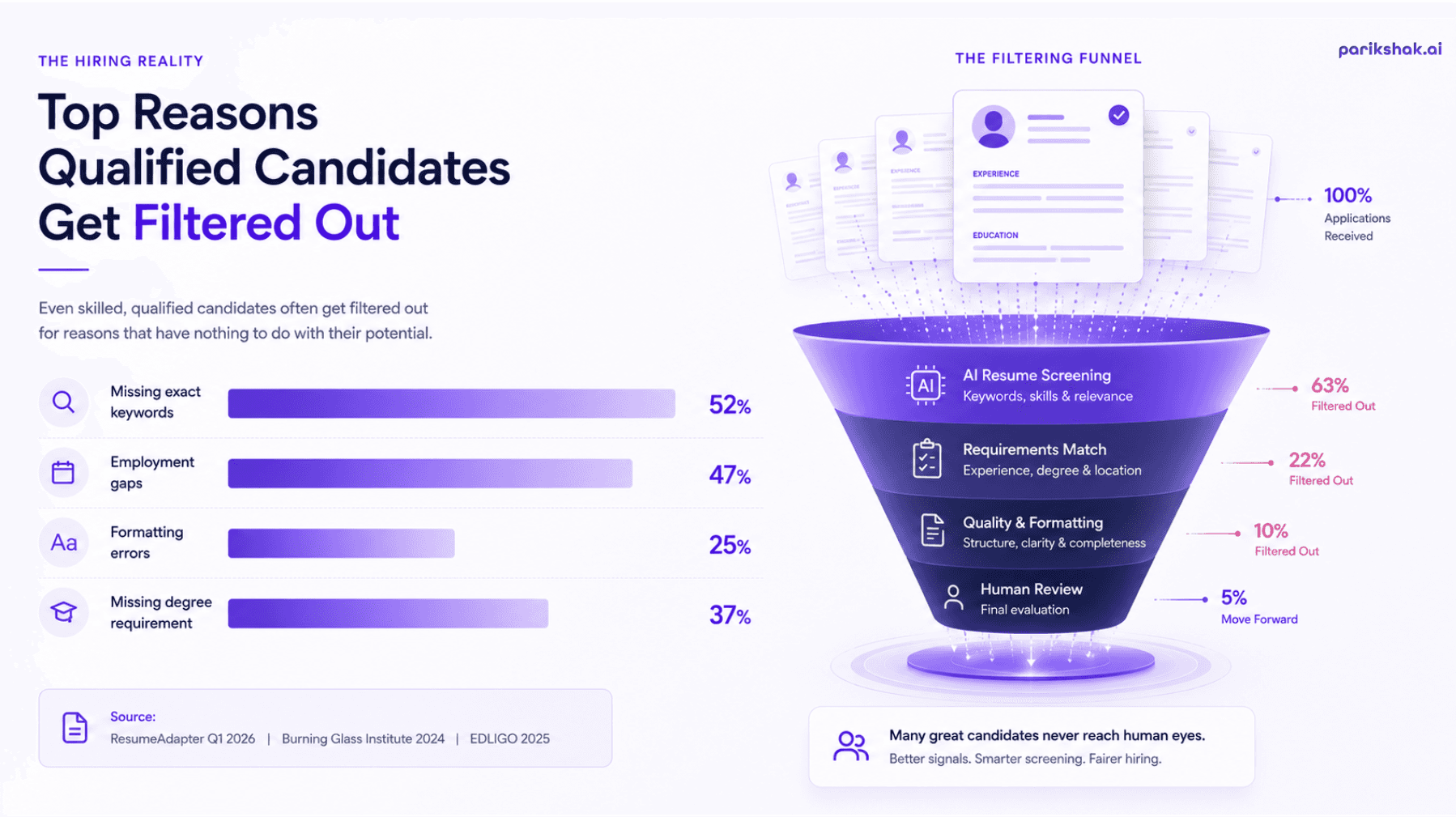
An analysis of over 1,000 rejected resumes across Workday, Taleo, and Greenhouse found that 52% of keywords in a typical job description are missing from the average resume, even when the candidate is objectively qualified (ResumeAdapter, Q1 2026). The problem isn’t bad candidates. It’s a rigid matching architecture that confuses vocabulary with competence.
Consider how most applicant tracking systems work: a recruiter uploads a job description, the ATS extracts target keywords, and incoming resumes are scored on exact-match overlap. A software engineer who writes “scripting and automation” instead of “Python” gets ranked low, same skills, different words. A tech lead in Bolivia submitted his own resume under a fake identity to his company’s ATS and was auto-rejected in seconds because the system searched for “AngularJS” when it actually needed “Angular”, two completely different frameworks sharing a name root.
This isn’t a bug in one platform. It’s a structural flaw in how keyword-first systems model human capability. The Burning Glass Institute reports that 15.7 million people are excluded from candidate pools because 37% of middle-skilled jobs still require a four-year degree (Burning Glass Institute, 2024). That’s before a single resume is even parsed.
Automated hiring filters systematically exclude more than 27 million qualified U.S. workers from jobs they could perform, according to a two-year study by Harvard Business School and Accenture(2021). Companies that reverse this pattern and hire from overlooked pools are 36% less likely to report talent shortages.
The downstream cost is staggering. Sixty percent of companies saw time-to-hire increase in 2025 (GoodTime, 2026). Roles sit open not because talent doesn’t exist, but because the system can’t see it. What if the pipeline itself is the bottleneck?
Who Are the ‘Hidden’ Workers That ATS Filters Miss?
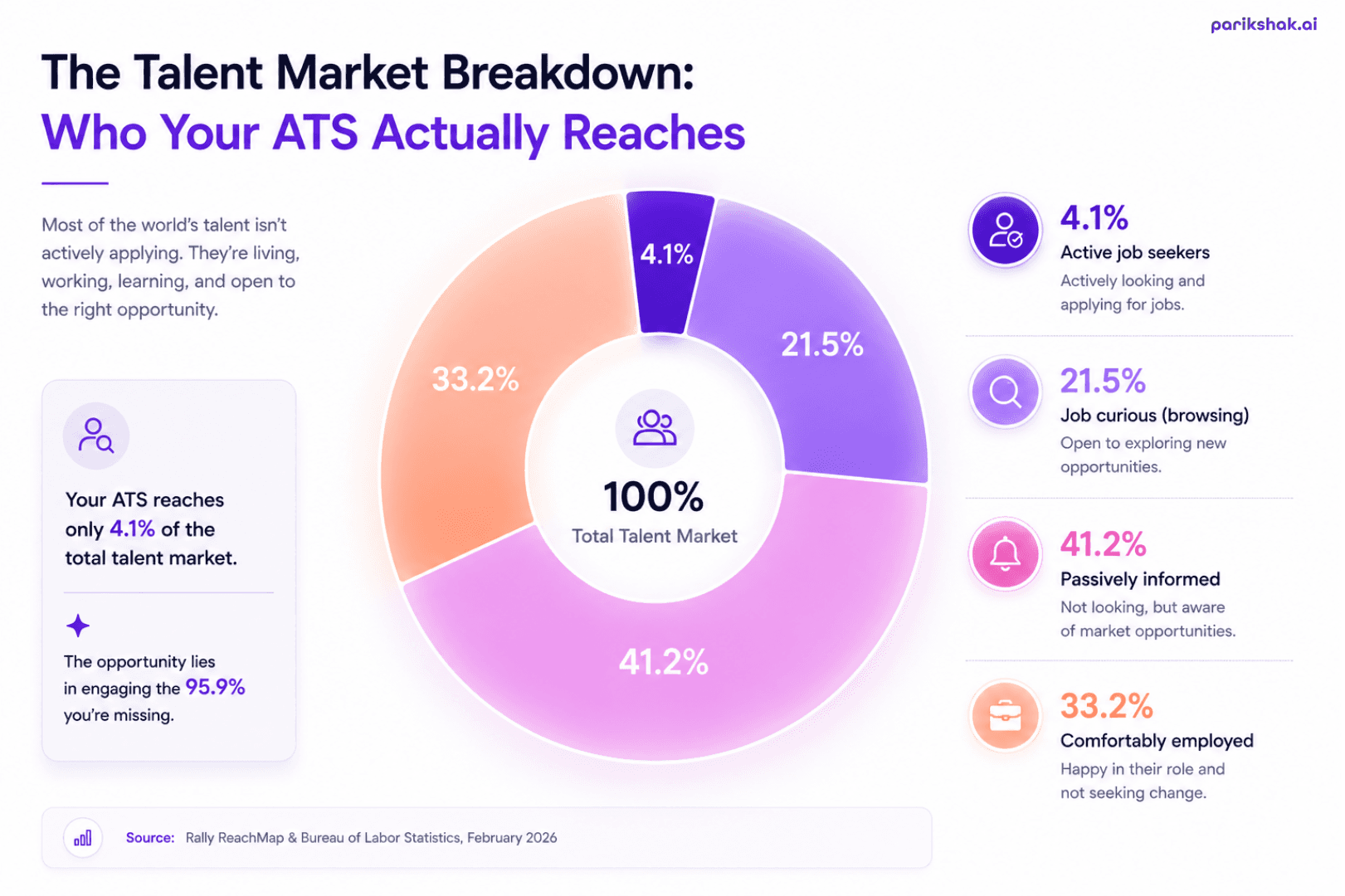
According to LinkedIn, 70% of the global workforce is passive talent, professionals who aren’t searching job boards or submitting applications but would consider the right opportunity (LinkedIn Talent Blog, 2026). Updated Bureau of Labor Statistics data from February 2026 puts the number even more starkly: only 4.1% of the reachable U.S. talent market is actively job-hunting at any given moment (Rally Recruitment Marketing, March 2026).
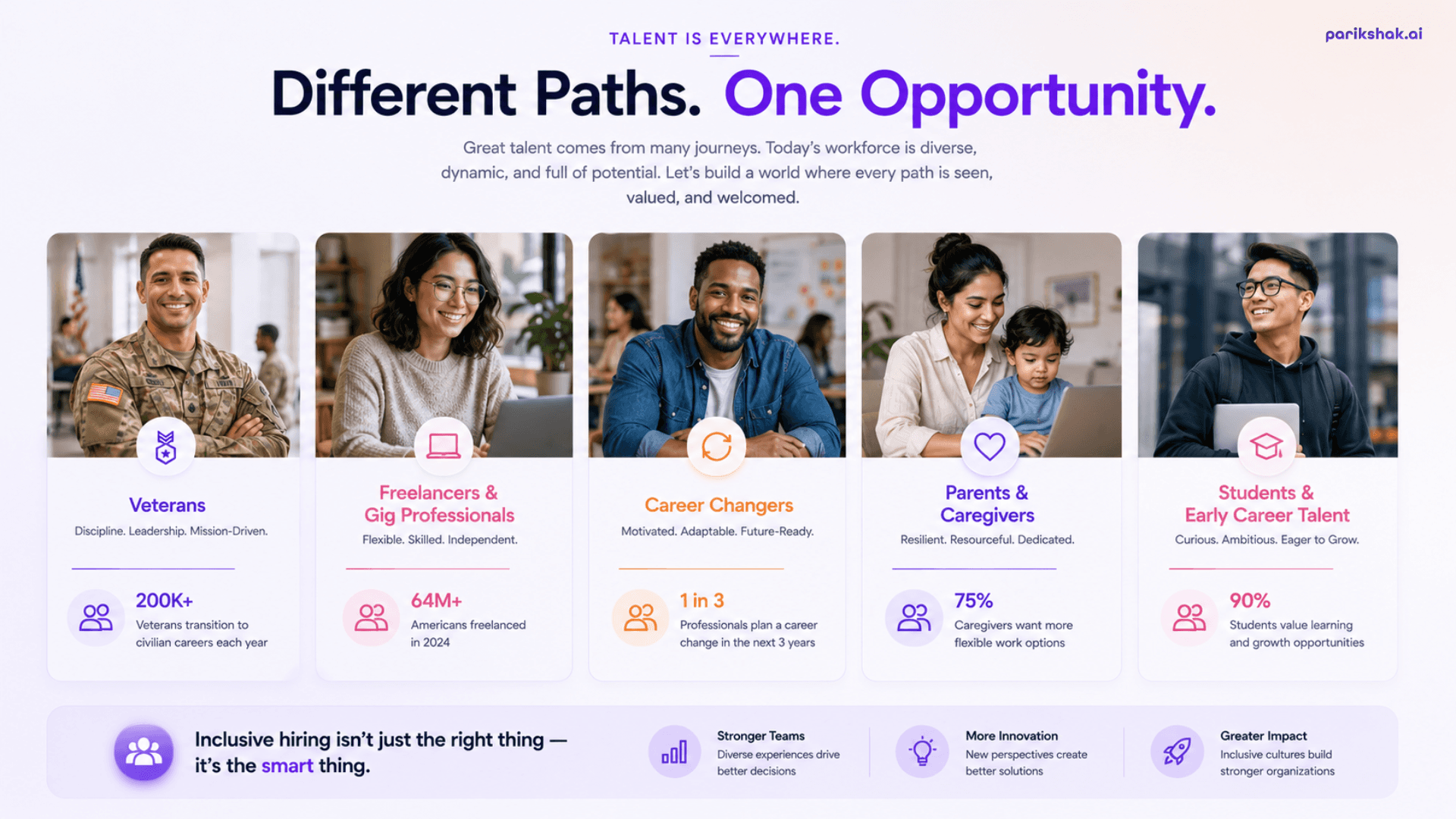
The “hidden” label covers a wide spectrum. There are the self-taught software developers whose portfolios live on GitHub, not on formatted resumes. Career-changers whose transferable skills — project coordination, stakeholder management, analytical reasoning, don’t map to the exact title a keyword filter expects. Military veterans whose operational leadership gets lost in translation. And the nearly 4.9 million Americans stuck in involuntary part-time work who would gladly take a full-time role if the system could see past their non-linear path (BLS, April 2026).
The scale is significant enough that Harvard Business School coined the term “hidden workers” and dedicated a multi-year research programme to the issue. Their central finding? Nine out of ten executives surveyed acknowledged that the software they use prevents them from seeing potentially strong candidates. The tools built to manage volume are actively working against quality.
Here’s the uncomfortable math: if your ATS only processes active applicants, you’re sourcing from roughly 25% of the available talent pool. Every hire you make from that slice competes with every other company fishing in the same stream. The other 75% isn’t unreachable, it’s just unreached.
Only 4.1% of the U.S. reachable talent market is actively job-hunting, while 74.4%, the “Hidden 75%”, consists of passive professionals who aren’t applying but can be influenced with the right sourcing strategy (Rally Recruitment Marketing & BLS, 2026). Traditional ATS pipelines, by design, never see them.
What Is Autonomous Sourcing and How Does It Differ from Traditional Recruiting?
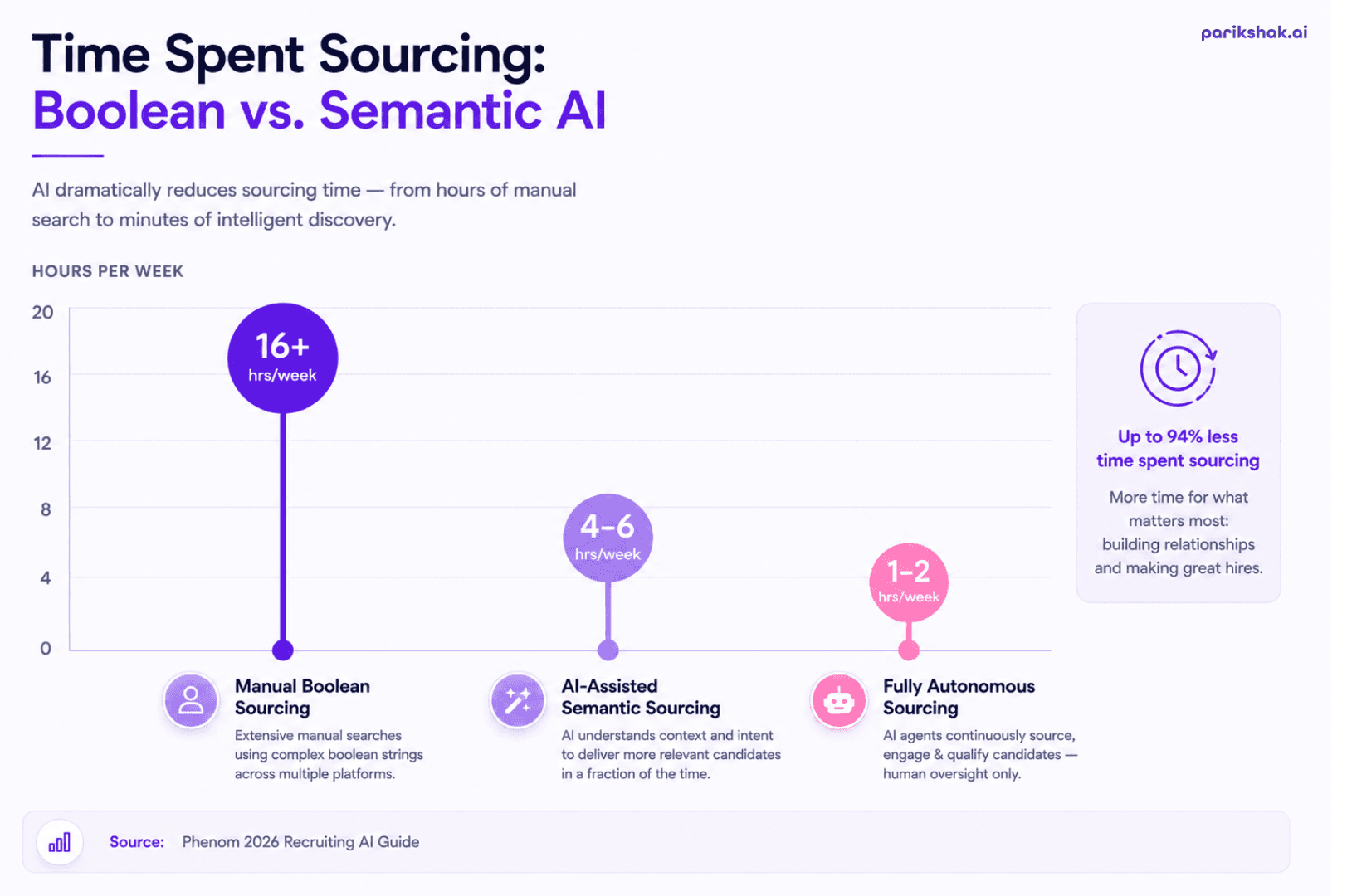
According to Phenom’s 2026 Recruiting AI Guide, manual Boolean sourcing consumes more than 16 hours of recruiter time per week, time spent constructing keyword strings, scrolling through irrelevant profiles, and refining searches that still miss candidates who use different terminology (Phenom, 2026). Autonomous sourcing replaces that loop with a fundamentally different architecture.
The concept rests on three pillars. Semantic talent search interprets what a recruiter means, not just what they type. Instead of rigid Boolean strings like ‘“software engineer” AND “fintech” AND “5+ years”‘, semantic AI understands that a candidate titled “payments platform developer” with six years at a banking startup is a strong match, even though none of those exact keywords appear. Modern platforms built on vector databases and retrieval-augmented generation (RAG) convert candidate profiles into mathematical representations that capture meaning and context, not just vocabulary.
AI skill clustering goes further. Rather than treating skills as isolated tags, clustering algorithms map the relationships between capabilities. Someone proficient in Kubernetes likely understands containerisation, CI/CD pipelines, and infrastructure-as-code, even if those terms don’t appear on their profile. Clustering infers the constellation of adjacent skills from the ones that are visible, dramatically expanding who can be discovered.
Implicit skill detection reads between the lines of a career history. A candidate whomanaged a cross-functional product launch didn’t just “manage a project”, they demonstrated stakeholder alignment, resource allocation, risk mitigation, and communication under pressure. Implicit detection surfaces these derived capabilities from contextual clues rather than waiting for candidates to list them in a skills section that an ATS might not even parse correctly.
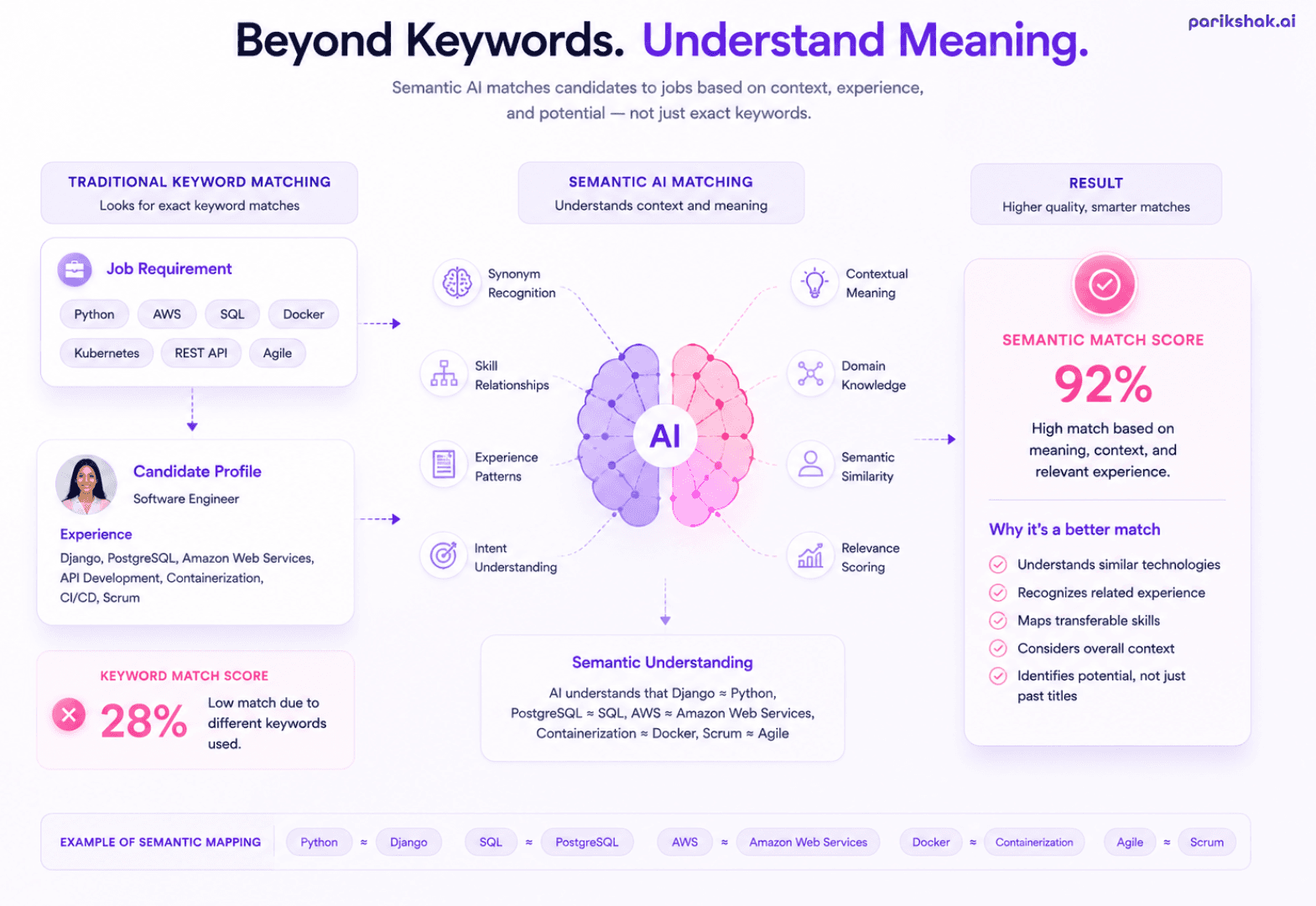
The practical result? According to HackerEarth’s 2026 evaluation of candidate sourcing tools, semantic search can expand the qualified talent pool by 3–5x compared to traditional keyword matching (HackerEarth, 2026). That’s not 3–5x more noise, it’s 3–5x more candidates who genuinely have the skills but were invisible under the old model.
Semantic sourcing platforms built on vector databases and RAG architecture convert candidate profiles into contextual representations that capture meaning rather than vocabulary. This approach expands qualified talent pools by 3–5x, surfacing candidates that Boolean keyword searches systematically miss (HackerEarth, 2026).
Why Does the Skills-Based Hiring Gap Still Exist in 2026?
NACE’s Job Outlook 2026 survey found that 70% of employers now use skills-based hiring for entry-level roles, up from 65% the previous year (NACE, 2026). GPA as a screening tool has dropped from 73% in 2019 to just 42% in 2026. On paper, the revolution is well underway. In practice? Harvard Business School and the Burning Glass Institute reviewed companies that publicly dropped degree requirements and found that 45% did so “in name only”, fewer than 1 in 700 hires were actually non-degree graduates at some large firms (Harvard & Burning Glass Institute, 2025).
The disconnect has a name: the intention-action gap. Companies announce skills-first
policies because it’s good branding. But hiring managers retain enormous autonomy in
candidate selection and often default to familiar credentials when reviewing a stack of
resumes. The ATS continues to score degrees as a positive signal even when the job
posting says “degree preferred, not required.” And without structured, objective
assessment at the point of evaluation, old habits persist unchallenged.
This is where sourcing and assessment need to work as a single system, not separate
steps. Expanding the top of the funnel with semantic search means nothing if the middle of the funnel still filters by pedigree. The organisations seeing real results, the ones 36% less likely to face talent shortages, per Harvard’s data, aren’t just sourcing differently.
They’re evaluating differently too. They’ve replaced resume-scanning with structured
rubrics, skill assessments, and competency-based interviews that give non-traditional
candidates a fair shot at proving what they can do.
The skills-based hiring gap is fundamentally a measurement problem, not a policy problem. When companies announce “we hire for skills” but don’t change how they measure skills, replacing keyword scans with structured assessments and rubric based evaluation, the policy becomes performative. The 45% “in name only” category isn’t evidence that skills-first hiring doesn’t work. It’s evidence that sourcing reform without assessment reform produces no change.
What Does Autonomous Sourcing Look Like in Practice?
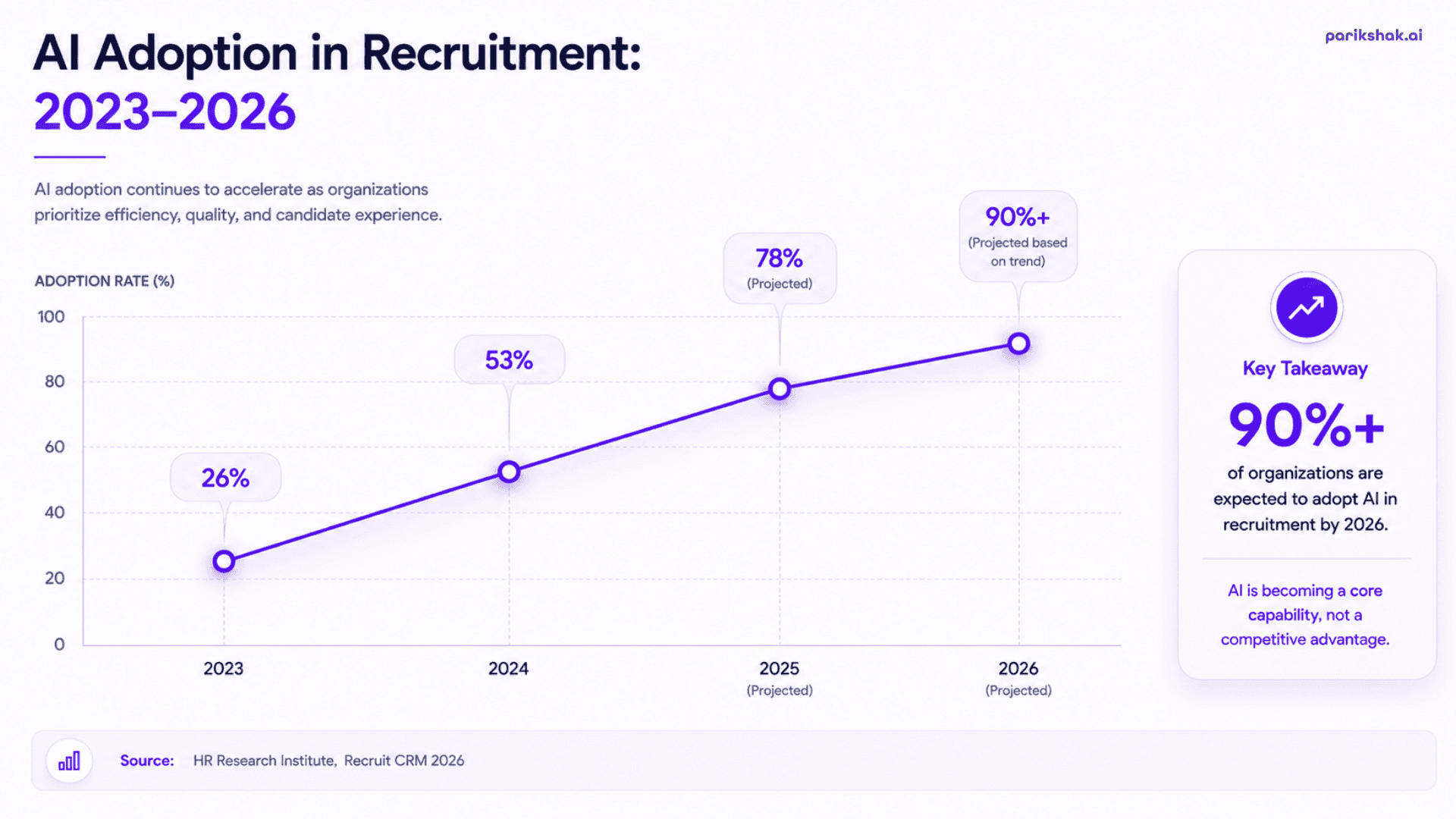
AI usage in recruitment nearly doubled between 2023 and 2024, rising from 26% of
organisations to 53%, according to the HR Research Institute. By late 2024, 90% of
recruiters using AI-driven sourcing tools reported significant improvements in time-to-hire, and 70% of those automating screening saw an uptick in candidate quality (Recruit CRM, 2026). The trajectory is clear. But what does it actually look like when a team moves from keyword-dependent sourcing to an autonomous model?
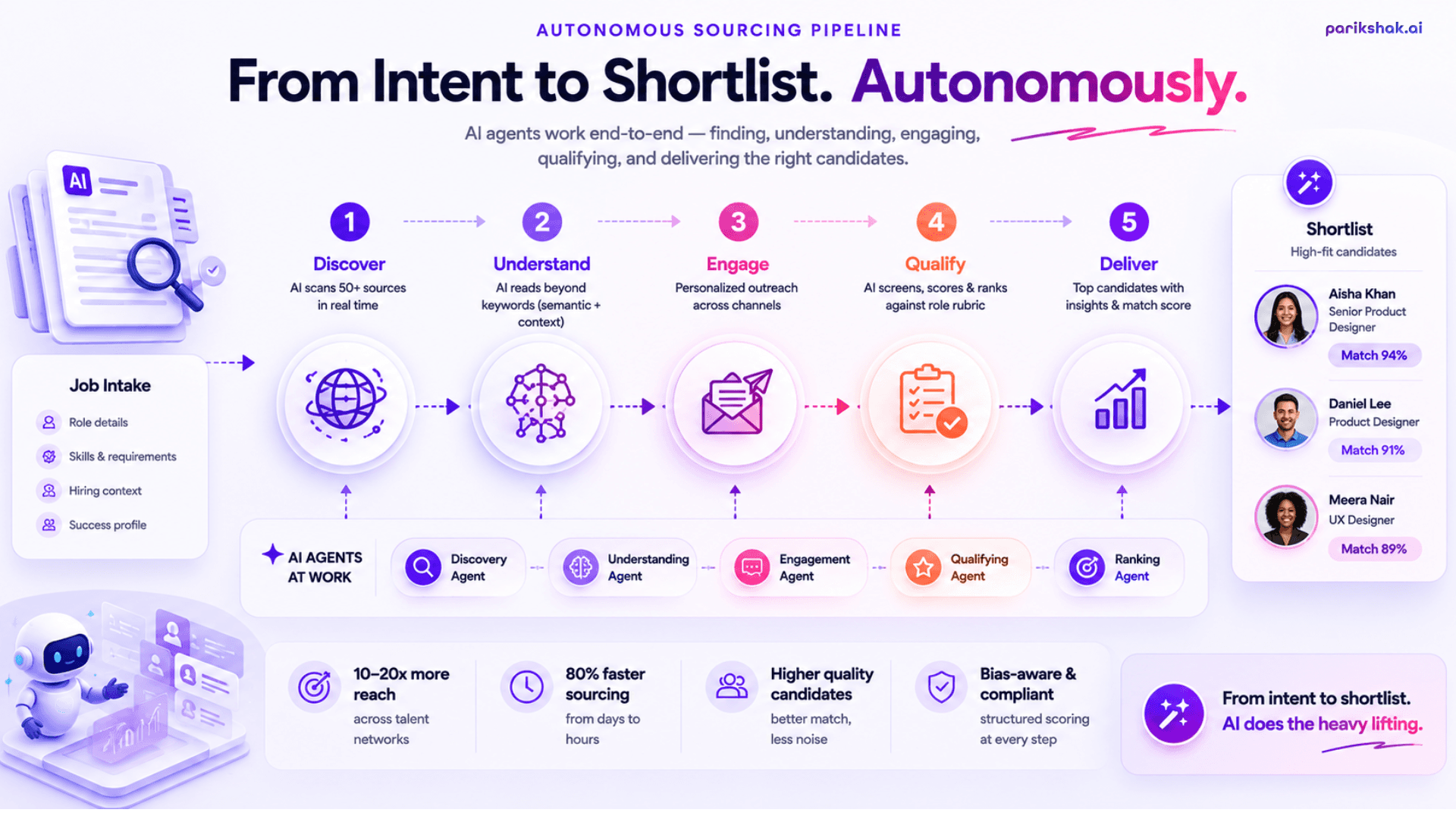
A practical autonomous sourcing workflow follows four stages. First, a hiring manager
describes the ideal candidate in plain language, role context, seniority, industry
background, required capabilities, rather than constructing Boolean strings. Second,
semantic AI searches across multiple data sources (professional profiles, open-source
contributions, publication databases, internal talent pools) and ranks results by contextual
fit. Third, AI skill clustering infers adjacent capabilities and flags non-obvious matches: a
data analyst with strong SQL and Tableau experience who also shows signals of Python
proficiency through project descriptions. Fourth, the shortlist is presented to the recruiter
with explainable matching rationale, not a black-box score, but a transparent breakdown
of why each candidate was surfaced.
When we built Parikshak.ai’s assessment engine, one
pattern kept emerging from early customer conversations: sourcing teams would surface strong candidates through new AI tools, but those candidates would stall at the interview stage because hiring managers reverted to credential-based snap judgments. That’s why we designed structured assessment packs that evaluate candidates against role-specific rubrics, ensuring the evaluation process matches the ambition of the sourcing process. The talent you find is only as good as the process that evaluates them.8 out of the first 10 hires made through Parikshak.ai came from candidates lacking one or more traditional screening signals such as a tier-1 college, brand-name employer, or direct industry experience.
The critical shift is from reactive to proactive. Traditional ATS waits for candidates to find you. Autonomous sourcing goes out and finds the talent, then gives that talent a fair,
structured evaluation. That’s the difference between posting a job and hoping the right
person sees it, versus mapping the talent landscape and engaging the best matches
directly.
AI-driven sourcing tools have reduced manual search time from 16+ hours per week to under two hours of human oversight in fully autonomous models (Phenom, 2026). Ninety percent of recruiters using these tools report faster time-to-hire, while 70% report measurably higher candidate quality (Recruit CRM, 2026).
How Can Hiring Teams Build an Autonomous Sourcing Strategy?
According to a SHRM report, 73% of employers adopted skills-based hiring in the past year, a jump from 56% in 2022 (SHRM, 2025). The intent is accelerating. But as we’ve seen, intent without infrastructure delivers nothing. Here’s a practical framework for teams ready to move beyond keyword-dependent sourcing.
Audit your current rejection patterns. Pull a sample of candidates your ATS rejected
or ranked lowest in the past quarter. How many were rejected for vocabulary mismatches rather than genuine skill gaps? If 88% of employers believe they’re losing qualified candidates to ATS filtering (Tracker, 2026), the odds are your system is doing the same thing. Knowing where the leak is lets you know what to fix first.Move from keyword matching to capability mapping. Replace rigid Boolean search
strings with plain-language role descriptions that focus on outcomes, not acronyms. What should this person be able to do? What problems should they solve? Semantic AI works best when it has rich context, not a stripped-down list of technologies.Close the sourcing-assessment gap. Every candidate your new sourcing approach
surfaces needs a structured evaluation pathway, not a resume review by a hiring
manager who hasn’t been briefed on the new strategy. Use rubric-based scoring,
role-specific assessment packs, and competency interviews that test actual capability. This is where the 45% “in name only” problem gets solved.Measure what matters. Track new metrics: sourcing channel diversity, non-traditional
candidate conversion rates, time-to-qualified-shortlist (not just time-to-hire), and
assessment-score distributions across candidate sources. If your semantically sourced
candidates perform as well or better than traditionally sourced ones in structured
assessments, and the Harvard data suggests they will, you have the business case to
scale.
Teams using structured assessment platforms like Parikshak.ai can close this loop by
running the same rubric-mapped evaluation across all sourcing channels — creating an
apples-to-apples comparison that removes the credential bias from the equation entirely.Where Is Autonomous Talent Discovery Heading Next?
PwC has calculated that the global talent shortage could result in an $8.5 trillion revenue loss by 2030 if nothing changes (PwC, 2024). At the same time, 99.8% of talent acquisition teams now use, pilot, or plan to use AI agents in their hiring workflows (GoodTime, 2026). The convergence is inevitable: the cost of missing talent is too high, and the tools to find it are maturing rapidly.
Three developments will define the next phase. First, agentic AI, systems that don’t just search and rank, but autonomously execute multi-step sourcing workflows — will compress the entire source-to-shortlist cycle from days to hours. These aren’t chatbots with a search bar. They’re AI team members that map talent landscapes, send personalised outreach, manage responses, schedule assessments, and update the ATS without human intervention at each step.
Second, the EU AI Act’s requirements for explainable scoring in hiring decisions will push the entire industry toward transparent, audit-ready evaluation models. Tools that can’t explain why a candidate was surfaced or scored a certain way face regulatory risk. This is a structural advantage for platforms built on rubric-based, explainable AI rather than black-box matching algorithms.
Third, the integration of sourcing and assessment into a single workflow, where finding a candidate and evaluating a candidate happen in one continuous process, will eliminate the handoff friction that causes so many strong candidates to drop out mid-funnel. When 72% of job seekers report negative mental health impacts from long hiring processes (HiringThing, 2025), speed isn’t just efficiency. It’s a candidate-experience imperative.
The winning phrase in autonomous sourcing isn’t “we found more candidates.” It’s “we found the talent that doesn’t want to be found”, professionals who aren’t looking, aren’t applying, and aren’t optimising their resumes for ATS keywords, but who are exactly the people a role needs. The companies that build systems to reach them won’t just hire faster. They’ll hire different, and that’s the real competitive advantage.
Ready to Source the Talent Your ATS Can’t See?
If your hiring team is sourcing from the same 25% of the talent market as everyone else, the math doesn’t change. Parikshak.ai’s structured assessment packs let you evaluate candidates from any sourcing channel, traditional applicants, semantically sourced profiles, referrals, internal transfers, against the same role-specific rubrics. No credential bias. No keyword gatekeeping. Just a fair, structured measure of what each person can actually do.
The talent crisis isn't a supply problem. It's a visibility problem. Twenty-seven million qualified workers are hidden from conventional hiring systems. Seventy percent of the global workforce will never apply to your job posting. And every day that your sourcing strategy depends on keyword matching and resume parsing, you're fishing in a pool that represents a fraction of the available talent market.
Autonomous sourcing, powered by semantic talent search, AI skill clustering, and implicit skill detection, rewrites the discovery equation. It finds candidates based on what they can do, not what words they put on a document. But finding them is only half the equation. Evaluating them fairly, through structured assessments and rubric-based scoring, is what turns a wider funnel into better hires.
The companies building these systems today aren't just solving a hiring problem. They're building a structural advantage, 36% less likely to face talent shortages, faster to hire, and drawing from a talent pool their competitors can't even see. We find the talent that doesn't want to be found. The question is whether your process is ready to evaluate them when we do.
Related Blogs

The Best Candidates Rarely Apply. They Signal. Here's How to Find Them.

Your ATS Didn't Reject Good Candidates. Your Filters Did.

AI Recruitment 101: A Complete Guide for HR Leaders & Startup Founders