From Resume Graphs to Capability Graphs: The Next Hiring Shift
Resumes snapshot history. Capability graphs map what someone can actually do tomorrow. Here's how Indian hiring teams make the shift — and why it matters now
AI & Automation
10 mins
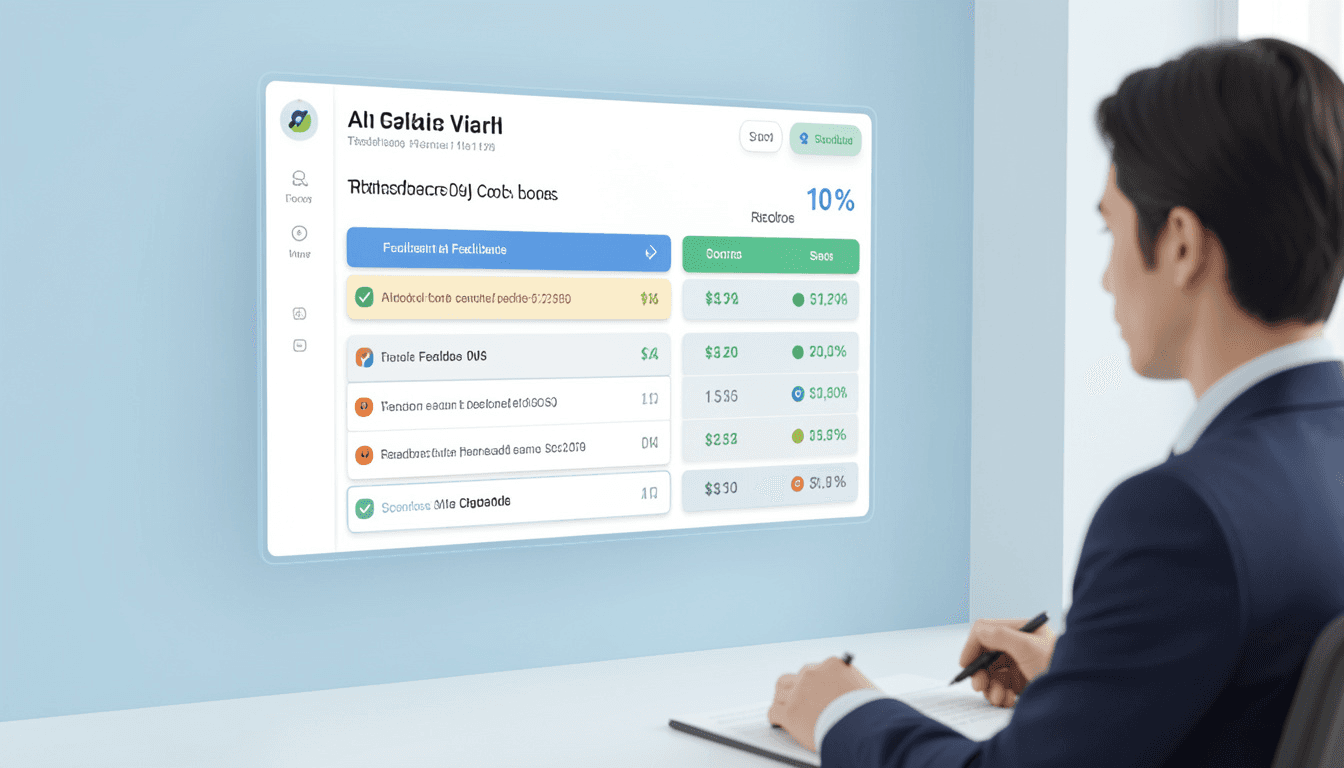
The hiring world is moving from static resume graphs to living capability graphs. That shift will change how you find, evaluate, and trust talent — and it is happening faster than most Indian HR teams have adapted to.
Resumes are brittle. They snapshot a story: titles, dates, a few buzzwords, and a list of responsibilities that tell you what a candidate was given the opportunity to do, not whether they can do what you need done tomorrow. That used to be fine when labour markets were stable and roles were rigid. Neither of those conditions applies to Indian startup and MSME hiring in 2025.
Two forces collided and created the shift. First, teams need specific, demonstrable outputs: work samples, project artefacts, short structured interviews that surface actual thinking. Second, AI makes it possible to map skills, evidence, context, and outcomes into a living graph — one that updates, connects, and reasons about capability across people and roles.
Parikshak.ai internal data: in our early deployments, hiring teams consistently said that capability-linked evidence — work samples combined with structured interview transcripts — made decisions feel “objectively justified” rather than “vibey.” The shift is not just philosophical. It shows up in hiring confidence and 90-day retention.
Reality check: employers across industries are publicly moving to skills-first approaches and away from credentials as the dominant filter. HBR documented this trend as early as 2022, and it has accelerated in India’s startup and MSME hiring market since, particularly for non-tech functions where credential proxies are weakest.
Bold Rule: Stop treating resumes as profiles. Treat them as one weak signal among many. The hiring team that builds a capability graph wins the shortlist quality battle against the team still reading CVs.
Here is the practical framing: if you can convert the messy signals of experience into standardised capability nodes and edges — and then run consistent assessments against them — you can make hiring predictable instead of guesswork. That is the operational promise of the capability graph shift.
The Real Gap: Resume Graphs vs Capability Graphs
The difference between a resume graph and a capability graph is not technical. It is what each one tells you about whether a candidate can do the job tomorrow.
Resume Graph | Capability Graph |
|---|---|
Titles, dates, buzzwords | Demonstrated task outputs with rubric scores |
Credential proxies (institution, employer brand) | Capability nodes mapped to role competencies |
Fast to parse, easy to game | Higher-lift to build, significantly better signal |
Static — updates only when the candidate updates it | Living — updates as evidence accumulates |
Filters at volume, misses strong non-traditional candidates | Surfaces capability regardless of career path or institution |
Operator take: resumes give you a story. Capability graphs give you a scorecard.
Parikshak.ai internal data: our pipelines map candidate artefacts — assignments, recorded micro-interviews, rubric scores — into nodes that hiring teams can query by role competency. The practical output is a shortlist where every ranking position is backed by specific evidence, not recruiter impression.
The comparison with Prompt-to-Hire™ versus traditional ATS flows is worth making explicit, because these are complementary tools with distinct roles.
Prompt-to-Hire™ (Parikshak.ai) creates role prompts that generate JDs, interview instruments, and work samples — and runs the assessments so you get ranked shortlists with evidence attached.
ATS remains the system of record: where offers, payroll, and legal workflows live.
Bold Rule: Use Prompt-to-Hire™ to build evidence. Use your ATS to store the hire. Do not expect an ATS to be your evaluation engine — it was never designed to be one.
One citation worth citing directly: decades of personnel research show that structured assessments and work-sample tests predict future performance far better than unstructured interviews or resume heuristics (Schmidt and Hunter, 1998 and 2016). The academic case for capability-based evaluation is not new. The operational infrastructure to run it at startup scale is.
Vignette from the field: last quarter a seed-stage founder asked us to “just speed up screening.” They had been hiring off resumes and gut calls. After a two-week Prompt-to-Hire™ pilot, we designed a 60-minute work sample with a scoring rubric. The founder told us: “It felt like someone handed me a cheat code — I could see what they could do.” They hired two candidates with thin resumes but clean capability evidence. Both outperformed the prior hire by month one. That story is now common in our deployments.
Actionable Playbook: PAIR and the Capability Graph Maturity Model
You do not need to rebuild your entire hiring stack to start building capability graphs. You need a framework that fits into existing workflows and produces better signal on the next role you open. That framework is PAIR.
PAIR: Prompt. Assess. Instrument. Rank.
P: Prompt — write a role prompt, not a JD
Ask one question: what is the single most valuable thing this hire must produce in their first 90 days? Write the answer in two sentences. That is your role prompt.
Parikshak.ai note: Prompt-to-Hire™ automates the conversion from role prompt to JD plus targeted assessment instruments. The prompt is the input that determines the quality of everything downstream.
Bold action: write one two-sentence prompt for your most urgent open role before you post the JD.
A: Assess — choose a work sample that maps to the output
Design a task that mirrors the actual first-90-days deliverable. Keep it time-boxed — two to four hours maximum. Attach a rubric with three to five dimensions that correspond to the capabilities the role requires.
Bold action: every assessment must map to at least one rubric dimension and one business outcome. If you cannot draw that line, the task is testing the wrong thing.
I: Instrument — capture artefacts, not impressions
Structure the assessment delivery and capture what the candidate produces: code, documents, recorded micro-interviews, timestamped transcripts. Score them consistently across every candidate using the same rubric. Run inter-rater checks between panel members.
Parikshak.ai internal data: we store artefacts as nodes tied to rubric scores so every hire has an evidence trail you can query. Hiring managers reviewing the shortlist see dimension-level scores and the specific evidence that drove each score — not a composite number without explanation.
R: Rank — by evidence, not intuition
Produce a ranked, evidence-backed shortlist. Use structured interview follow-ups for ambiguous cases. Push finalists to ATS only after evidence clears.
Bold action: rank by evidence-weighted score. If a recruiter or hiring manager wants to override the ranking, require them to point to a specific dimension where their assessment of the candidate differs from the rubric score. That discipline surfaces the cases where the rubric needs updating versus the cases where intuition is overriding evidence without justification.
The Capability Graph Maturity Model
Where does your hiring organisation sit on the capability graph maturity curve? This model is a practical diagnostic.
Level 0: Resumes and gut. Decisions made on CV impressions and informal reference calls. High noise, high bias, low reproducibility.
Level 1: Standardised tests and forms. Generic skills tests added to the funnel. Better than nothing, but often not role-specific enough to produce high-quality signal.
Level 2: Work-sample assessments with rubrics. Role-specific tasks with structured scoring. Significantly better signal. This is where most serious hiring teams in Indian startups should be operating.
Level 3: Living capability graph. Candidate artefacts, role mappings, continuous retesting, and an internal hiring marketplace where capability nodes are queryable across roles and time. Enterprise-grade, but the infrastructure is becoming accessible at startup scale.
If you are at Level 0 to 1, PAIR gets you to Level 2 in one hiring cycle. If you are at Level 2, Prompt-to-Hire™ helps you operationalise Level 3: scalable artefact capture, rubric standardisation, and queryable capability data that compounds across every role you fill.
Vignette: a mid-market HR head told me they had tried skills tests but still hired the “usual suspects.” When we layered a short role-specific project and forced a rubric-scored review by three independent interviewers, decisions changed. They found higher-quality candidates who had not passed the resume filter — candidates from non-metro backgrounds who had built strong portfolios through self-directed work but whose CVs did not carry the institutional signals the ATS had been filtering for.
Parikshak.ai’s Prompt-to-Hire™ turns a two-sentence role prompt into a JD, work-sample assessment, AI interview, and ranked evidence-backed shortlist. From Level 0 to Level 2 in one hiring cycle. Book a free demo and see the capability graph output on a live role →
Proof from the Pipelines
The case for capability-based hiring is not theoretical. It is documented across academic research, enterprise practice, and Parikshak.ai’s own deployment data.
The science is settled on structured assessment validity. Meta-analyses across decades of personnel research consistently show that work-sample tests and structured interviews are among the strongest predictors of job performance (Schmidt and Hunter, 1998 and 2016). Unstructured interviews and resume heuristics — the default tools in most Indian startup hiring — rank significantly lower on predictive validity. The academic case for capability-based evaluation has been established for thirty years. The operational infrastructure to run it at startup scale is what has changed.
Resumes perform poorly at initial screening. Analysis published in NIH/PMC (2022) demonstrates that structured application forms and evidence-based assessments consistently outperform resumes as initial screening instruments. The resume’s weakness is not that it contains false information. It is that the information it contains — titles, dates, credential signals — correlates poorly with the capability that actually predicts role performance.
Skills-first hiring is becoming the market standard in India. LinkedIn’s India Talent Trends data consistently shows skills-first hiring growing as a practice among Indian companies, particularly in the startup and growth-stage segment. Organisations that have moved to skills-based evaluation report faster shortlist agreement between recruiters and hiring managers, lower 90-day attrition, and higher hiring confidence. The trend is not a Western import. It is a response to the same capability visibility problem that Indian HR teams face with a diverse, high-volume talent pool.
Enterprise HR stacks are already integrating capability graph infrastructure. SAP and SkyHive are examples of platforms enhancing talent profiles with dynamic skills data at enterprise scale. The direction of the market is clear. The question for Indian startups and MSMEs is whether to build toward this infrastructure now or catch up later.
Parikshak.ai internal data: in our flows, candidates provide artefacts — work samples, recorded micro-interviews — that map to capability nodes. Hiring teams consistently tell us that those artefacts are the single most persuasive part of offer justification. Not the composite score. The specific evidence behind the score.
Operator truth: a rubric score without context is less persuasive than a rubric score plus a brief annotated output showing the candidate explaining their approach. The evidence is the argument.
Vignette: we ran a comparison for a client — one pipeline used resume screening, another used a two-hour work sample with a rubric through Prompt-to-Hire™. The hiring manager said the second group led to more confident offers and fewer trial-and-error hires. The candidates who came through the capability-based pipeline arrived with evidence the entire panel had reviewed. The decision conversation was about trade-offs, not about impressions.
Bold Rule: Measure the delta — time-to-evidence, hire confidence, and 90-day performance. Those are the real KPIs, not just time-to-offer.
Parikshak.ai’s Prompt-to-Hire™ turns a role prompt into a capability graph: work samples, AI interviews, rubric scores, and a ranked evidence-backed shortlist. From job post to shortlist on a timeline that depends on the role, workflow configuration, and candidate availability. Book your free demo today →
Parikshak.ai is India’s AI-powered Prompt-to-Hire™ recruitment platform. From job post to ranked shortlist — sourcing, screening, and AI interviews handled end to end. No large HR team required.
Related Blogs

Your ATS Didn't Reject Good Candidates. Your Filters Did.

How AI Resume Screening Works

Psychometrics vs Skill-Based Assessments: Which One Actually Predicts Hiring Success?